

Holiday Shutdown Checklist: How to Lay Up Plant Equipment and Restart It Safely
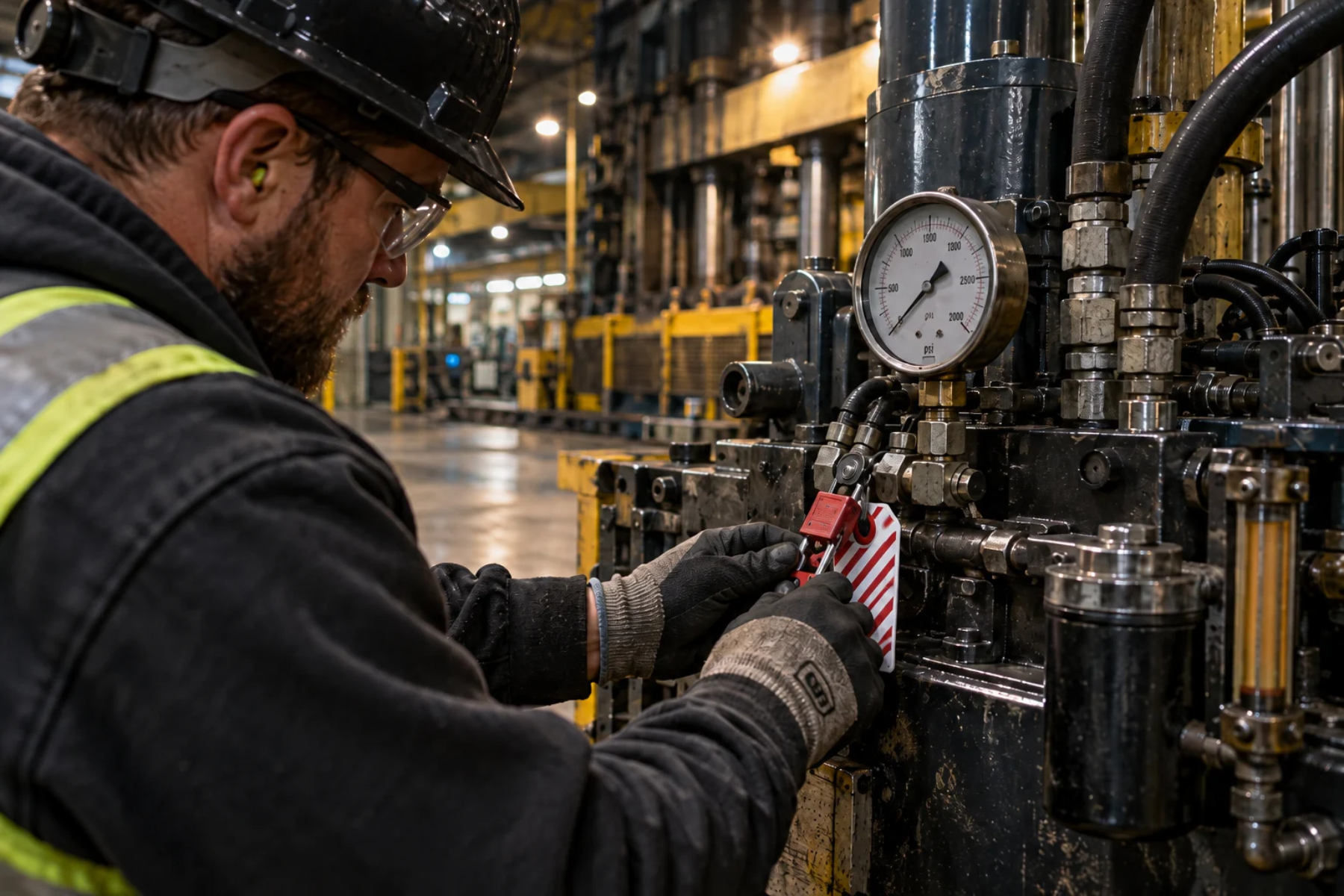
Plant managers heading into a year-end shutdown get a rare window: a week or two with the lines down and the building quiet. A good holiday shutdown checklist does four jobs. It keeps the right systems running, lays up the rest so it restarts clean, keeps someone checking the plant while it’s empty, and brings everything back in a set order with light load first.
In most cases, that’s a few days of prep in December and a planned restart day in January. The payoff is a first shift back that runs parts instead of chasing faults.
If you’re using the shutdown for bigger maintenance or project work, that’s a different planning job. Our guide to scoping an industrial outage covers it. This post covers parking the plant and bringing it back.
What should stay running during a holiday shutdown?
Anything that protects the building, protects equipment from cold, water, or lost power, or tells someone when something’s wrong should stay running through the break.
- Building heat and freeze protection. An empty plant still needs heat at every at-risk line, including eyewashes, dead legs, and piping near dock doors. [LINK PENDING: Oct 28 freeze protection post, anchor “which plant lines freeze first”]
- Fire protection. Sprinkler systems, fire pumps, and the alarm panel stay in service, with monitoring active.
- Sump pumps and drainage. A midwinter thaw or heavy rain can fill a pit while nobody’s there to see it.
- Power to controls and UPS systems. Anything that holds programs or data in memory needs a plan before power comes off.
- Heat and conditioning that equipment depends on. Hydraulic tank heaters, heaters or dehumidifiers in electrical rooms, and temperature control for stored materials.
- Alarms with a person on the other end. Remote monitoring only helps if every alarm routes to someone who’ll answer it over the holiday.
What belongs on a holiday shutdown checklist for production equipment?
A good layup checklist backs up anything that can be lost, records how everything was left, and puts each system in a safe, stable rest state. Work through it by system so nothing gets missed.
- Back up controls. Save every PLC, HMI, and drive program to non-volatile storage, and check or replace backup batteries before power comes off. Some controllers keep their program in battery-backed memory, and a dead battery over the break can mean reloading from backup on restart morning.
- Record the as-left state. Valve positions, breaker positions, setpoints, open work orders, and active lockouts, tagged in the field and written down in one place the restart crew can find.
- Hydraulic systems. Bring cylinders and rams to their rest position, relieve stored pressure per your procedure, top off reservoirs, and leave tank heaters on where they’re fitted.
- Presses. Park the slide and secure it per the OEM’s shutdown procedure, including die blocks where the procedure calls for them.
- Compressed air. Drain receivers and drop legs, confirm auto drains are working, and decide whether dryers stay on. Condensate left sitting in lines can freeze or corrode.
- Cooling loops and process water. Confirm glycol strength in loops that stay filled, keep circulation running where the system is designed for it, and drain what can’t be kept above freezing.
- Electrical. Decide panel by panel what gets de-energized, then lock and tag it. Keep heat or dehumidification on in electrical rooms where temperature swings bring condensation.
Who should check the plant while it’s down?
Assign a named person to walk the plant on a set schedule, at least daily and more often during a cold snap, and route every alarm to someone who’ll respond.
A walk takes less than an hour with a short list: temperatures in at-risk areas, sump levels, signs of water or leaks, fire panel status, unit heaters running, and exterior doors closed. Write down what was checked and when.
Keep a call list with the maintenance lead, an electrician, a mechanical contractor, the gas and electric utilities, and your insurance contact. Confirm before the break who’s actually reachable on December 24 through January 1.
What order should you bring equipment back up in?
Bring the plant back in the order it depends on itself: building utilities, then compressed air and cooling, then electrical distribution, then controls, then production equipment at no load before full load.
- Walk down before anything is energized. Clear lockouts per your procedure, and check for water, leaks, debris, and anything moved during the break.
- Building utilities. Confirm heat, water, and gas are stable.
- Compressed air and cooling. Start compressors, drain condensate, and bring cooling loops up to temperature.
- Electrical distribution. Re-energize in stages, from main gear down to branch panels, watching for trips at each step.
- Controls. Power up PLCs and HMIs, confirm programs and setpoints loaded, and check I/O before any motion.
- Production equipment. Run each machine at no load, warm hydraulics to operating temperature, then step up to production rates.
Plan restart day with a lighter first-shift target. Most equipment shouldn’t run at full capacity right away, and line speed can come back over a shift or two.
What problems show up first on restart?
The problems that show up first on restart are cold hydraulic oil, lost controller programs, electrical trips, moisture, and seals or valves that set up while idle. Most of them are catchable in the first hour.
- Cold hydraulic oil. Thick oil starves the pump inlet and can cause cavitation. Listen for a whine at startup, use tank heaters, and let the system warm up before it takes load.
- Lost programs or settings. A controller that lost memory over the break needs a reload. That’s a quick fix when the backup is on hand and a long morning when it isn’t.
- Electrical trips. Bringing a large share of the plant up at once can trip breakers. Staging the restart keeps it manageable.
- Moisture. Condensate in air lines and panels shows up after temperature swings. Drain air lines and check panel interiors before energizing.
- Seals, valves, and moving parts. Components age even when they’re not running. Watch for leaks and stiff operation on the first cycles.
- Freeze damage. A line that froze over the break may not leak until it’s back under pressure.
When should you bring in a contractor?
Bring in a contractor when the shutdown window is the right time for repairs your team can’t staff, or when restart needs more electrical and mechanical hands than you’ll have in the building.
Outside help makes sense when:
- A repair or rebuild has been waiting for downtime, like a hydraulic pump, a press component, or a compressor overhaul
- Controls need program backups, battery replacement, or troubleshooting before the break
- Restart day needs extra electricians or mechanics on the floor
- Nobody on staff can respond to an alarm or a failure during the holiday week
- The restart walkdown turns up damage that needs repair before production
Why Lee Contracting?
Shutdown and restart work crosses mechanical, electrical, and controls, and Lee covers all three under one project manager. Our maintenance and repair team handles mechanical and hydraulic press rebuilds, PLC programming, and preventive maintenance built around your production calendar. Lee’s industrial electricians handle motor controls, backup power and UPS systems, and infrared imaging to check gear once it’s back under load.
On the mechanical side, Lee’s pipefitting and mechanical crews service compressed air systems and keep rental compressors, dryers, and chillers ready for delivery when something won’t come back. Emergency service runs 24/7/365, holidays included.
Every person on a Lee crew is an employee-owner, with a stake in your first shift back running on time.
Practical takeaways
- Keep heat, fire protection, sump pumps, controls power, and alarm monitoring running through the break.
- Back up every PLC, HMI, and drive program and check backup batteries before power comes off.
- Record the as-left state of valves, breakers, setpoints, and lockouts in one place.
- Walk the plant at least daily during the shutdown and route alarms to someone who’ll answer.
- Restart in order: utilities, compressed air and cooling, electrical distribution, controls, then production equipment.
- Run equipment at no load and warm up hydraulics before asking for full production.
FAQ
How far ahead should a plant prepare for a holiday shutdown? Start a few weeks out. Program backups, layup steps, and the call list take days, and any repair you want done during the break needs parts and crews lined up before the plant closes.
Do PLCs lose their programs when power is off? Some can. Controllers that store their program in battery-backed memory can lose it if the backup battery dies while power is off. Back up every program to non-volatile storage and check batteries before the shutdown.
Should compressed air stay on during a plant shutdown? It depends on what the air serves. Either way, drain receivers and drop legs before the break, confirm auto drains work, and plan for condensate when the system comes back.
How long should hydraulics warm up after a shutdown? Long enough for the oil to reach the minimum temperature the pump and fluid manufacturers specify before the system takes load. Cold, thick oil can starve the pump inlet and cause cavitation, so tank heaters and a low-load warm-up help.
What’s the first step when restarting a plant after a shutdown? A walkdown before anything is energized. Clear lockouts per procedure, check for water, leaks, and debris, then bring systems back starting with building utilities and ending with production equipment.
If there’s a repair waiting for downtime, or you want more electrical and mechanical hands on restart day, request a quote and we’ll scope the work with you before the plant closes. If something fails over the break, Lee’s emergency service runs 24/7/365.
