

How to Relocate Industrial Operations Without Losing Production
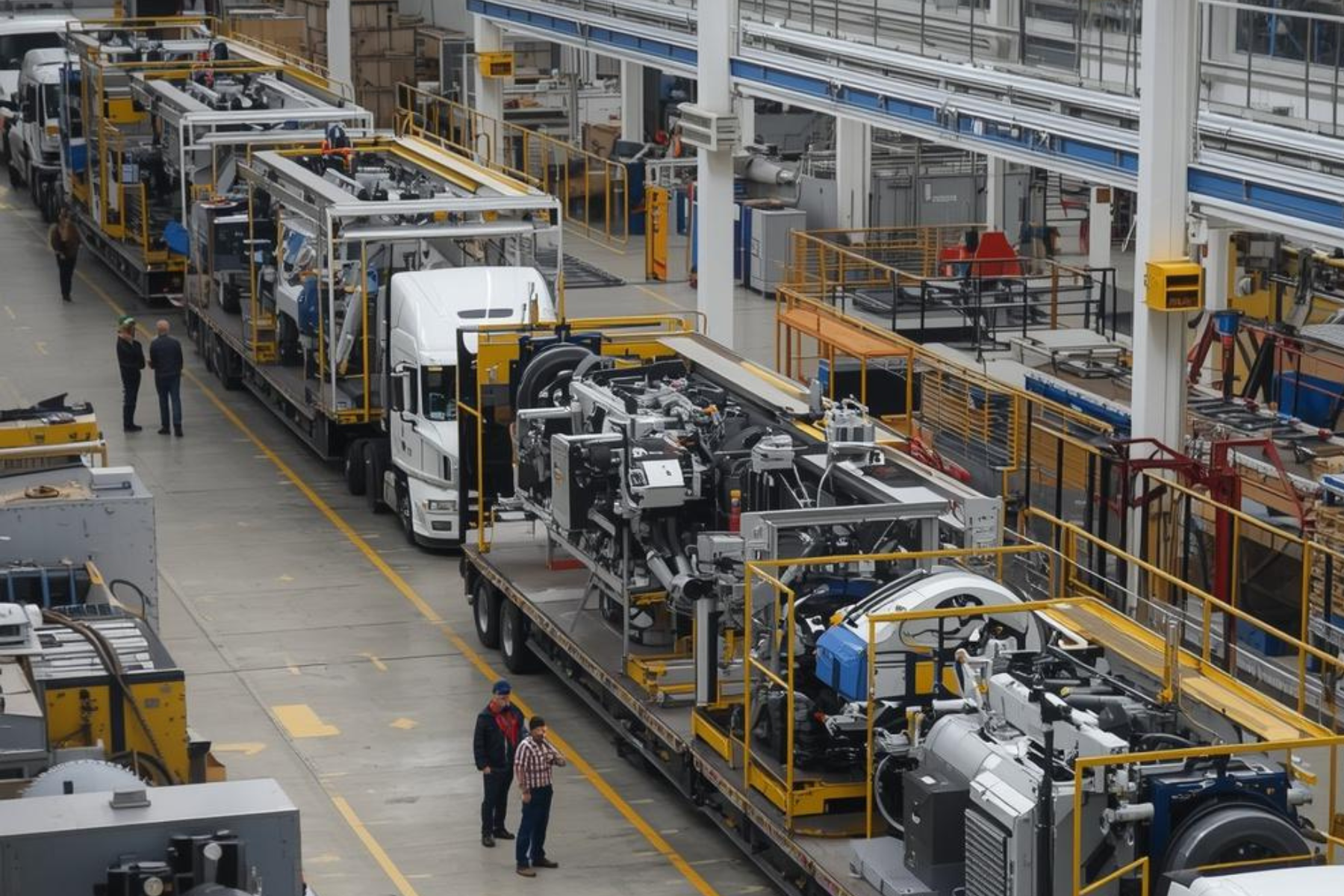
Moving industrial operations is one of the most complex projects a facility will ever execute. The equipment is heavy, the systems are interdependent, and the margin for error is measured in production hours and customer commitments — not inches.
Done well, a plant relocation transfers your operation from one facility to another with minimal disruption, clear sequencing, and a new site that’s ready to run from day one. Done poorly, it can cost weeks of lost production, damage critical equipment, and create cascading problems that take months to untangle.
The difference almost always comes down to planning and the quality of the contractor executing the work.
This guide covers what industrial plant relocations actually involve, where projects most commonly fail, and what a well-managed move looks like from the first site walk to the startup of the last machine.
Why Plant Relocations Are Happening at an Accelerating Rate
Several forces are driving facility moves across the manufacturing sector right now.
Reshoring is creating greenfield and brownfield facility buildouts as companies bring production back to North America. Facility consolidations are combining operations from multiple plants into a single, more efficient location. Capacity expansions are pushing manufacturers out of buildings they’ve outgrown. And mergers and acquisitions are triggering operational restructuring that requires relocating entire production lines.
In every one of these scenarios, the core challenge is the same: move complex, interconnected systems — on a defined timeline, within a defined budget — without an extended loss of production.
That’s not a moving job. It’s a multi-trade industrial project that requires the same rigor as any major facility installation.
What a Plant Relocation Actually Involves
It’s worth being direct about the scope of a proper industrial relocation, because it’s often underestimated at the outset.
A plant move isn’t just rigging equipment onto a flatbed and setting it down at a new address. It involves every trade that touched the original installation — plus everything required to make the destination facility ready to receive it.
A complete plant relocation scope typically includes:
Pre-Move Assessment and Planning
- Equipment inventory: what’s moving, what’s staying, what’s being decommissioned
- Condition assessment: is the equipment being relocated in a state worth moving?
- Utility mapping at both the origin and destination facility
- Rigging and transportation engineering for each major piece of equipment
- Sequencing plan that coordinates trades and protects production as long as possible
Site Preparation at the Receiving Facility
- Foundation work: new equipment pads, anchor bolt setting, pit construction
- Electrical infrastructure: power distribution, panel upgrades, feeder runs
- Mechanical systems: process piping, compressed air, HVAC, hydraulics
- Structural modifications if required by new equipment layout or clear height constraints
Disconnection, Rigging, and Transport
- Controlled disconnection of electrical, mechanical, and hydraulic systems
- Equipment rigging: engineered lift plans for critical and heavy picks
- Loading, blocking, and securing for transport
- Specialty transport for oversized or sensitive equipment
Reinstallation and Commissioning
- Precision placement and leveling at the new site
- Mechanical and electrical reconnection
- System commissioning and startup support
- Documentation of as-installed conditions
That’s a mechanical, electrical, rigging, fabrication, and civil scope — all running in a coordinated sequence against a schedule that operations leadership is watching closely.
Where Plant Relocations Go Wrong
Most plant relocation failures are predictable. They don’t happen because the work was technically impossible. They happen because the planning didn’t match the complexity of the project.
Underestimating rigging complexity. Large stamping presses, machining centers, and process equipment aren’t just heavy — they’re heavy in complex ways. Center-of-gravity shifts, equipment that must be partially disassembled for transport, and access constraints at either facility can turn a straightforward pick into a days-long operation if it wasn’t planned properly.
Destination site not ready when equipment arrives. This is one of the most common and costly failures in plant relocation. If foundations aren’t complete, electrical isn’t roughed in, or the floor slab can’t handle the load, equipment sits on a truck or in a staging area while the schedule burns. Coordination between the site prep work and the equipment move schedule is critical.
Electrical and mechanical reconnection delays. Disconnecting equipment at the origin is faster than reconnecting it at the destination. If the destination electrical infrastructure isn’t planned correctly — wrong voltage, wrong panel capacity, wrong conduit routing — reconnection becomes a change order and a delay.
No sequencing plan across trades. When mechanical, electrical, rigging, and civil crews operate independently without a coordinated schedule, they work against each other. Electrical can’t finish until rigging is done. Rigging can’t finish until foundations are ready. If these dependencies aren’t mapped and managed, every delay multiplies.
Treating the move as the scope, not the installation. Moving equipment is the middle of the project, not the whole project. Facilities that focus only on “getting the equipment there” and underinvest in site prep and commissioning pay for it on startup day.
How to Build a Relocation Timeline That Protects Production
The goal of timeline planning in a plant relocation isn’t just to hit a completion date — it’s to protect production as long as possible at the origin facility and establish production as quickly as possible at the destination.
Those two objectives don’t always pull in the same direction, which is why sequencing requires real thought.
Phased moves vs. full cutover. A phased approach moves equipment line by line or cell by cell, often allowing parallel production between the two facilities during the transition. A full cutover is a single event — the facility shuts down, everything moves, the new facility starts up. Phased moves reduce risk but take longer. Full cutovers are faster but carry more concentrated risk.
Using the production schedule as the sequencing driver. Which lines can go down first? Which pieces of equipment have the longest reinstallation time and need to move earliest? What’s the last piece of equipment that can leave before the origin facility falls below minimum viable production? These questions should drive the sequence plan, not logistics convenience.
Building in float for the critical path items. Foundations, electrical infrastructure, and commissioning are typically the critical path in a relocation. These items need the most schedule float built around them, because they have the least tolerance for delay.
Night and weekend scheduling. Some moves — particularly those inside active facilities — require working around production shifts. This adds cost but protects output. Factor it into the budget and timeline from the beginning.
The Rigging Factor: Why Heavy Equipment Moves Are a Specialty
Rigging in a plant relocation is not the same as general moving. It requires planning, engineering, and experienced execution — and the consequences of errors are expensive and sometimes dangerous.
Every major lift in a relocation should begin with a lift plan that covers:
- Load weight and center of gravity — often requires vendor data or field measurement for equipment without current documentation
- Rigging hardware selection — sling type, capacity, configuration, and angle calculations
- Crane and gantry selection — based on load, height, radius, and the physical constraints of both facilities
- Travel path planning — floor loading capacity, overhead clearances, doorway dimensions, and any structural concerns along the route
- Engineered lift plan for critical lifts — required by OSHA for certain lifts; best practice for all complex picks
Equipment that has been in place for decades sometimes reveals surprises during disconnection — integrated utility connections that aren’t documented, anchor systems that weren’t what the drawings showed, or condition issues that affect the rigging approach. A qualified rigging team anticipates this and plans for it.
Precision placement at the destination is equally important. Machine tools, presses, and process equipment must be set to exact alignment specifications. The rigging work doesn’t end when the equipment is on the floor — it ends when the equipment is leveled, aligned, and grouted to specification.
Setting Up the Receiving Facility for Day One
A plant relocation is only as successful as the destination facility’s readiness to receive equipment and put it back into production.
Foundation and floor verification. Before equipment arrives, foundations need to be complete, anchor bolts verified, and floor slabs confirmed for load capacity. Any deviation from design needs to be resolved before equipment is set — not after.
Utility tie-in readiness. Electrical feeds, compressed air headers, water and coolant connections, hydraulic supply lines — all of it needs to be in place and tested before equipment reconnection begins. Reconnection delays are expensive. They’re also avoidable.
Commissioning planning. Startup isn’t just turning a switch on. It involves running equipment through its operational parameters, verifying alignment and vibration, testing safety systems, and confirming that the production output meets specification. Commissioning should be planned as part of the project — not improvised at the end.
Documentation. As-installed drawings, electrical one-lines, mechanical schematics, and equipment alignment records should be produced as part of project closeout. If the origin facility never had good documentation, the relocation is an opportunity to create it. For new facilities, this documentation becomes the baseline for future maintenance work.
Why Multi-Trade Integration Is the Critical Variable
A plant relocation touches every trade: rigging, electrical, mechanical, foundations, fabrication, and in many cases civil utilities. When those trades are coordinated by a single project manager under one contract, the sequencing works. When they’re separate contracts or separate subcontractors with no unified schedule owner, delays compound.
The rigging crew can’t set equipment until foundations are ready. The electricians can’t land wire until equipment is in final position. The mechanical team can’t reconnect process piping until the rigging is complete and the equipment is aligned. Everyone is waiting on someone else — and when something slips, the ripple effect is immediate.
An integrated contractor who self-performs across those trades doesn’t eliminate complexity. But it puts one team in charge of the sequence, one project manager owning the schedule, and one accountable partner responsible for getting the equipment running at the destination.
That’s the model that keeps relocations on track.
What to Do Before You Call a Contractor
A few steps before you go to market for a relocation contractor will make the project go better:
- Document what you have. Equipment list, utility connections, as-built drawings if available. The more information you can give a contractor, the better the scope and the tighter the estimate.
- Define the production constraint. What’s the maximum acceptable downtime at the origin facility? What’s the earliest acceptable startup date at the destination? These parameters drive the entire project approach.
- Assess the receiving facility honestly. Walk it with your team and note every gap between what’s there and what you need. Foundation conditions, electrical capacity, clearances, and site access are all inputs to the project scope.
- Engage a contractor before the scope is locked. A contractor with plant relocation experience will identify issues you haven’t thought of. Involving them in pre-planning isn’t a cost — it’s a schedule and budget hedge.
Working With Lee Contracting on Your Plant Relocation
Lee Contracting has executed plant relocations across industrial sectors for more than 35 years. Our integrated team of rigging specialists, electricians, mechanical crews, and foundations experts works under one project manager — one team, one plan, one outcome.
We own our equipment. We self-perform our core trades. And we’ve done this work in live facilities where production pressure was real and the margin for delay was zero.
Whether you’re moving a single production cell or consolidating two facilities into one, we’re built to handle the complexity.
Ready to start planning your move? Contact Lee Contracting to talk through your relocation scope, timeline, and what it takes to protect your production through the transition.
Frequently Asked Questions
What is involved in an industrial plant relocation? An industrial plant relocation involves disconnecting, rigging, transporting, and reinstalling production equipment at a new facility. It typically requires multi-trade coordination across rigging, electrical, mechanical, foundations, and sometimes civil utilities, along with pre-move site preparation and post-move commissioning at the destination.
How do you minimize downtime during a plant relocation? Minimizing downtime in a plant relocation requires early planning, a phased move strategy where possible, a clearly sequenced schedule across trades, and a destination facility that is fully prepared to receive equipment before it arrives. Using a single integrated contractor who self-performs across trades reduces coordination gaps that cause delays.
How long does an industrial plant relocation take? Timeline depends on the volume and complexity of equipment, the distance between facilities, and the condition of the destination site. Single-line relocations may take a few weeks. Full facility moves with complex equipment and significant site prep work can run several months. Defining the production window constraint early helps build the right approach.
What trades are involved in a plant relocation? Most plant relocations involve rigging and transportation, electrical disconnection and reconnection, mechanical piping and systems work, foundations for new equipment pads, and sometimes fabrication for utility modifications. Having these trades under one contractor significantly reduces coordination risk.
When should you contact a relocation contractor? The earlier the better — ideally before the project scope is finalized. A contractor with plant relocation experience can identify site preparation requirements, flag rigging challenges, and help sequence the move in a way that protects production. Bringing a contractor in after decisions are already made limits their ability to prevent problems.
