
Tag: Equipment Maintenance

The Repair vs. Replace Decision: When Precision Machining Extends Equipment Life
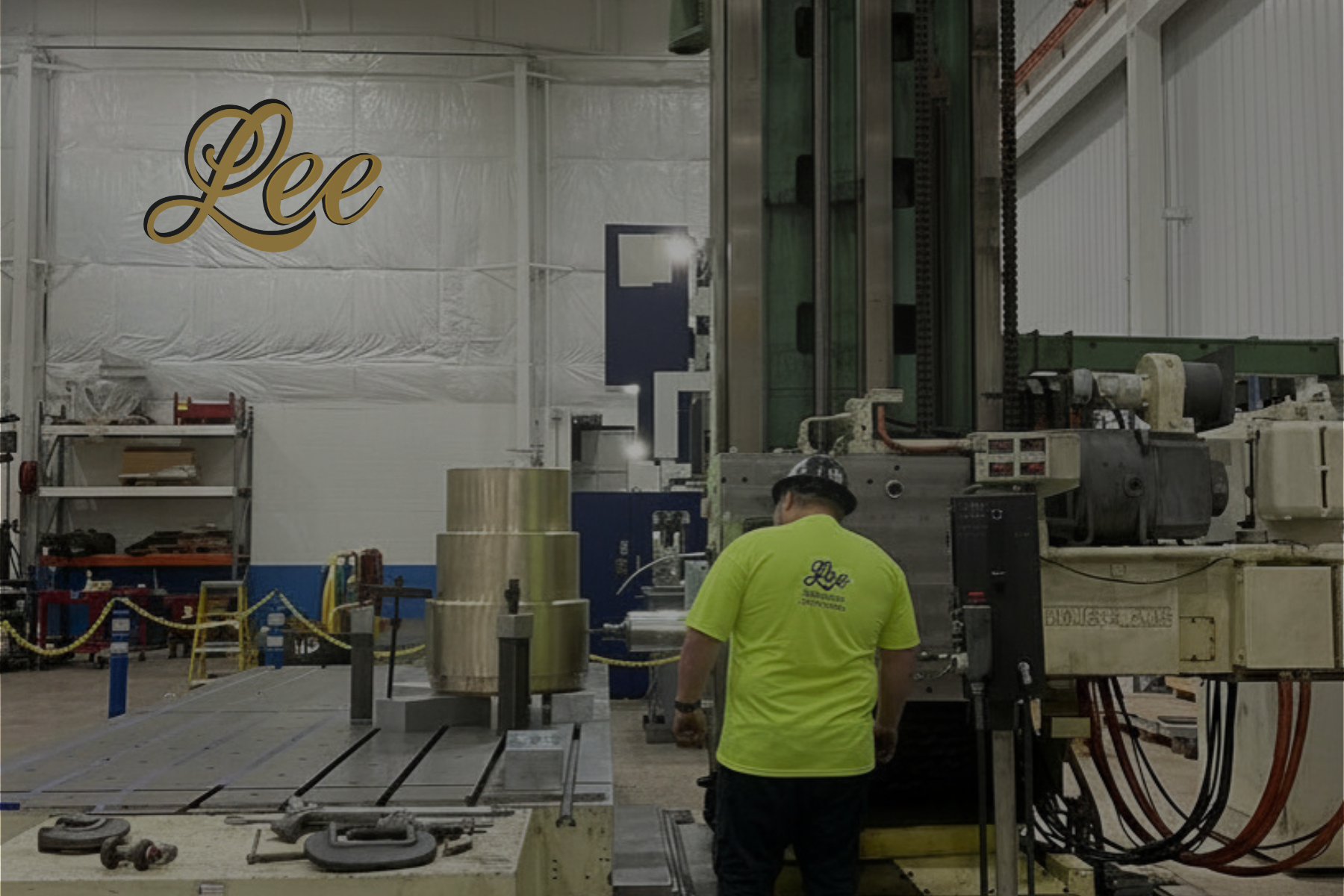
Capital equipment decisions carry real weight in 2026. Material costs are elevated, procurement lead times on replacement equipment have lengthened considerably, and most maintenance and reliability leaders are being asked to extend the productive life of existing assets wherever the technical case supports it.
The repair vs. replace question has always been part of the job. What’s changed is the cost environment around replacement. Tariff-driven price increases on capital equipment, extended delivery timelines, and the full installation cost of bringing in new equipment have all shifted the math — in many cases, toward repair.
This guide walks through how to make that decision correctly: not defaulting to replacement because it feels like the safer answer, and not defaulting to repair because it looks cheaper on paper.
The Short Answer: When to Repair vs. Replace Industrial Equipment
Repair is generally the right answer when:
- The base structure is sound and damage is localized to a wear surface, bore, or journal
- Replacement lead time or total installation cost significantly exceeds the repair cost
- A qualified machine shop can restore the component to OEM tolerances
- The equipment has meaningful productive life remaining
Replacement is generally the right answer when:
- The base structure is compromised beyond what precision repair can address
- Repeated failures in the same location indicate a design or application problem
- Total cost of ownership over remaining asset life favors new equipment
- A suitable replacement is available quickly and total installation cost is competitive
The decision should be based on condition assessment data and complete cost inputs — not a default assumption that either path is automatically safer.
What Does Precision Machining Repair Actually Cover?
Precision machining repair restores worn or damaged components — bores, journals, and sealing surfaces — back to their original dimensional specifications. When a bore goes out of round, a bearing housing wears beyond tolerance, or a shaft journal gets damaged, the path to repair runs through a machine shop, not a parts catalog.
The standard execution path for most precision machining repairs is: component removal, transport to a qualified machine shop, machining back to specification, inspection, and return for reinstallation. Most industrial plant environments don’t have the floor space, overhead clearance, or equipment access that precision machining work requires. The work goes to the shop because that’s where the setup conditions exist to do it correctly.
The core capabilities that address the most common repair situations include:
- Line boring — restoring bores to roundness, concentricity, and specified diameter after wear or impact damage
- Bore welding and remachining — building up worn or undersize bores with weld material, then remachining to specification
- Flange facing — restoring sealing surfaces on large flanges and valve bodies
- Journal turning — restoring worn shaft journals to correct bearing fit dimensions
- Drilling and tapping — new hole placement or thread restoration in heavy structures
- Keyway cutting — new keyways or restoration of damaged keyways on shafts and hubs
These capabilities address the most common failure modes in heavy industrial environments: bearing housings with bores worn out of round, misaligned or oversized bores from accumulated wear, shaft damage at bearing and coupling fits, damaged flanges that won’t hold a seal. In each case, the damage is localized to a precision surface in an otherwise sound structure — exactly the kind of problem precision machining is built to address.
What about field machining? For a limited set of applications — very large structural components, certain kiln and press configurations, equipment that genuinely cannot be safely transported — field machining in place is the right approach. Portable machining equipment is brought to the workpiece rather than the other way around. For the majority of precision repair work in manufacturing environments, however, the component comes to the shop.
Lee Contracting’s maintenance and repair capabilities include precision machining and line boring work, supported by in-house fabrication and weld repair capacity for build-up work required before remachining.
When Should You Repair Instead of Replace Industrial Equipment?
Repair makes a strong case — technically and financially — when several conditions are met. The analysis starts with the technical question (can the repair restore the component to serviceable condition?) before it gets to cost. A repair that’s mechanically viable and produces a correctly toleranced result is worth doing. A repair that’s technically marginal isn’t a cost savings; it’s deferred failure.
The base structure is sound and the damage is localized. Precision machining addresses localized damage to wear surfaces, bores, and journals. It can’t restore structural integrity that has been compromised. When the damage is confined to a bearing seat or shaft journal in an otherwise intact housing, repair is precisely what the situation calls for.
Replacement lead time would extend downtime significantly. Compare the full procurement timeline on the replacement — not just the list lead time — against the repair and reinstallation schedule. In the current supply environment, that comparison frequently favors repair.
Total replacement cost exceeds the repair cost by a meaningful margin. Equipment replacement is rarely a simple swap on heavy industrial equipment. Rigging the old equipment out and the new equipment in, foundation evaluation, electrical reconnection, alignment, and commissioning all add scope — and those costs are consistently underestimated when the initial replacement decision is made.
The equipment has meaningful productive life remaining. An asset with three to five good years left may not need to be replaced during this outage. Repair that restores it to specification extends that life without the capital and downtime cost of full replacement.
A qualified shop can achieve OEM tolerances. The repair case rests on a technically sound result. A qualified machine shop with the right equipment and machinists should achieve dimensional results equivalent to original manufacture. If that standard isn’t achievable, the repair case weakens.
Production loss from extended downtime is quantifiable. When a critical asset sits on a production path and extended downtime carries real production cost, that cost belongs in the analysis — on both the repair side and the replacement side.
When Does Replacement Make More Sense Than Repair?
Credibility in this analysis requires an honest look at both sides. The repair path doesn’t always win.
The base structure is compromised. Machining addresses localized wear and damage. It can’t rebuild a housing that has failed structurally or is cracked through a load-bearing section. When the assessment reveals that kind of damage, replacement is the answer.
Repeated failures indicate a systemic problem. If an identical bore has been remachined twice in five years, the question isn’t how to repair it again — it’s why it keeps failing. A design issue, an application mismatch, or a load condition the component wasn’t rated for won’t be solved by another repair. Replacement with a better-specified component addresses the root cause.
A newer generation of equipment offers meaningful advantages. Not all replacement decisions are driven by failure. When newer equipment offers efficiency, safety, or capacity gains that justify the capital investment, the repair vs. replace analysis should acknowledge that honestly.
Total cost of ownership favors new equipment. Ongoing maintenance burden, parts availability, and capacity constraints from aging equipment all factor into the long-term ownership picture. When that picture favors replacement, the repair case needs to reflect it.
A replacement component is available quickly. When a qualified replacement is in inventory or can be procured on a short timeline, the schedule advantage of repair narrows. The downtime comparison cuts both ways.
The goal isn’t to always repair. The goal is to make the right call with complete information.
What Does Equipment Replacement Actually Cost?
The instinct to replace rather than repair often rests on an incomplete cost picture. The purchase price of a new component is visible. The total cost of getting that component into service frequently isn’t.
Procurement lead times have extended. Capital equipment with significant metal content carries tariff-driven cost increases and longer manufacturing lead times in 2026. The assumption that a replacement will arrive on the expected timeline is worth confirming before the outage plan is built around it.
The installation scope is broader than most initial quotes reflect. Rigging the old equipment out and the new equipment in requires engineered lift plans, certified rigging crew, and appropriate equipment — work Lee Contracting’s rigging team performs as part of integrated project execution. Foundations may need evaluation or modification for a different equipment footprint. Electrical disconnection and reconnection add scope. Mechanical reconnection, alignment, and commissioning add more. When those trade scopes are fully accounted for alongside the equipment cost, the total replacement figure is often meaningfully higher than the initial quote suggested.
Downtime cost compounds while replacement is in transit. When a critical asset is down while a replacement is procured, manufactured, shipped, and installed, the production impact accumulates daily. A repair path that returns the component to service faster — even at a cost premium over the machining work alone — can recover production value that exceeds the cost difference between the two options.
The repair case gets stronger in direct proportion to how long replacement takes and how much installation actually costs. In the current environment, both of those inputs have moved in repair’s favor.
What Does a Precision Machining Repair Require to Be Done Right?
A decision to repair is only as good as the shop performing the work. Quality here depends on equipment, expertise, and process — not just willingness to take the job.
Pre-job measurement and documentation. Before any machining begins, the component’s existing condition needs to be fully measured and documented — bore diameter, out-of-round, surface condition, position relative to datum features. That documentation confirms the repair is technically feasible, establishes the baseline, and defines the target tolerances for the finished work. Shops that skip this step are working without a verified target.
Weld repair capability when build-up is required. Bores and journals worn or damaged below the minimum diameter for remachining need to be built up with weld material before the machining operation can begin. This is a common step in precision bore repair, and it requires certified welders with experience on the relevant material grades. Lee Contracting’s in-house fabrication and weld repair capability handles this as part of the same repair sequence — the work doesn’t need to move between facilities.
Machinists with relevant equipment experience. The setup geometry, cutting parameters, and measurement approach for line boring a large bearing housing are different from those for remachining a shaft journal on a gearbox. Machinists who have worked on the specific equipment type and bore geometry bring experience that directly affects first-attempt success rate and tolerance achievement.
Equipment rated for the tolerance requirements. Machine shop equipment has its own accuracy specifications, and those specifications need to match what the application demands. Bore size, material hardness, and required surface finish all inform whether a given machine and tooling setup can achieve the result.
Coordination with the outage schedule. Component removal, transport, machining, inspection, return, and reinstallation all need to be sequenced within the available downtime window. The repair timeline needs to be confirmed before the equipment comes down — not negotiated after it arrives at the shop.
For a full picture of Lee Contracting’s capabilities in this area, see our maintenance and repair and additional services pages.
Start with a Qualified Assessment, Not a Default Assumption
The repair vs. replace decision is most useful when it’s made with real data: a condition assessment of the component, honest lead time and installation cost information on the replacement side, and a clear picture of what the repair path involves. When the analysis uses complete inputs, the right answer is usually clear — and in a cost environment where replacement is both more expensive and slower than it used to be, that answer is frequently repair.
If you have equipment showing wear or damage, talk with Lee Contracting before committing to either path. An assessment of the component’s condition and repairability before the outage is worth considerably more than a decision made under time pressure once the equipment is already down.
Contact Lee Contracting to discuss a specific equipment situation, or explore our maintenance and repair capabilities.
Frequently Asked Questions
When should I repair vs. replace industrial equipment? Repair is generally the right answer when the base structure is sound, damage is localized to a wear surface or bore, replacement lead times or total installation costs would extend downtime or exceed the repair cost significantly, and a qualified shop can achieve OEM tolerances. Replacement makes more sense when the structure is compromised beyond what precision repair can address, repeated failures indicate a systemic problem, or a total cost of ownership analysis favors new equipment. The decision should be based on condition assessment data — not a default assumption about which path is safer.
What kind of industrial equipment can be repaired with precision machining? Precision machining repair applies to heavy industrial components with worn or damaged bores, journals, or sealing surfaces: bearing housings, gearbox housings, press frames, pump and compressor bodies, large flanges, mill housings, and similar components. The common factor is localized damage to a precision surface in an otherwise structurally sound component.
What is line boring, and when is it used for repair? Line boring is a precision machining process that remachines a worn or damaged bore back to its specified diameter, roundness, and concentricity. When the bore has worn below the minimum diameter for remachining, weld material is first applied to build the surface back up, then the bore is machined to specification. In most industrial plant environments, this work is performed at a machine shop after the component is removed and transported — plant floor space and overhead access typically don’t support the setup requirements for in-place machining.
When is field machining the right approach instead of shop machining? Field machining — performing precision machining at the plant without removing the component — is appropriate when the component is too large, too heavy, or too complex to transport safely to a machine shop. This applies to certain kiln and press configurations, large structural components integral to the building or foundation, and other situations where removal is genuinely impractical. For most bearing housings, gearbox components, and similar assemblies, removal and shop machining is the standard path.
How long does a precision machining repair take compared to equipment replacement? Precision machining repairs for typical industrial components generally complete in days to a couple of weeks, including removal, transport, machining, inspection, and reinstallation. Equipment replacement requires full procurement lead time — weeks to months in the current supply environment — plus the complete installation sequence: rigging, foundation evaluation, reconnection, alignment, and commissioning. For components with long replacement lead times, the schedule advantage of repair can be substantial.
What are the hidden costs of replacing industrial equipment? Beyond the purchase price, equipment replacement typically involves rigging out the old equipment and rigging in the new, foundation evaluation and potential modification, electrical disconnection and reconnection, mechanical reconnect, alignment, and commissioning. In 2026, extended procurement lead times and tariff-driven cost increases on capital equipment with significant metal content have added further to the total cost picture. When all of those trade scopes are accounted for, the total replacement figure is often meaningfully higher than the initial equipment quote suggested.
What should I look for in a machine shop for precision industrial repair? Pre-job measurement and documentation capability, certified weld repair for the relevant material grades, demonstrated experience on the specific equipment type and bore geometry, equipment rated for the tolerance requirements of the application, and the ability to coordinate with your outage schedule rather than treating the job as a standard queue item. The repair is only as good as the shop and the process behind it.

Subscribe and receive updates via email
Press Repair
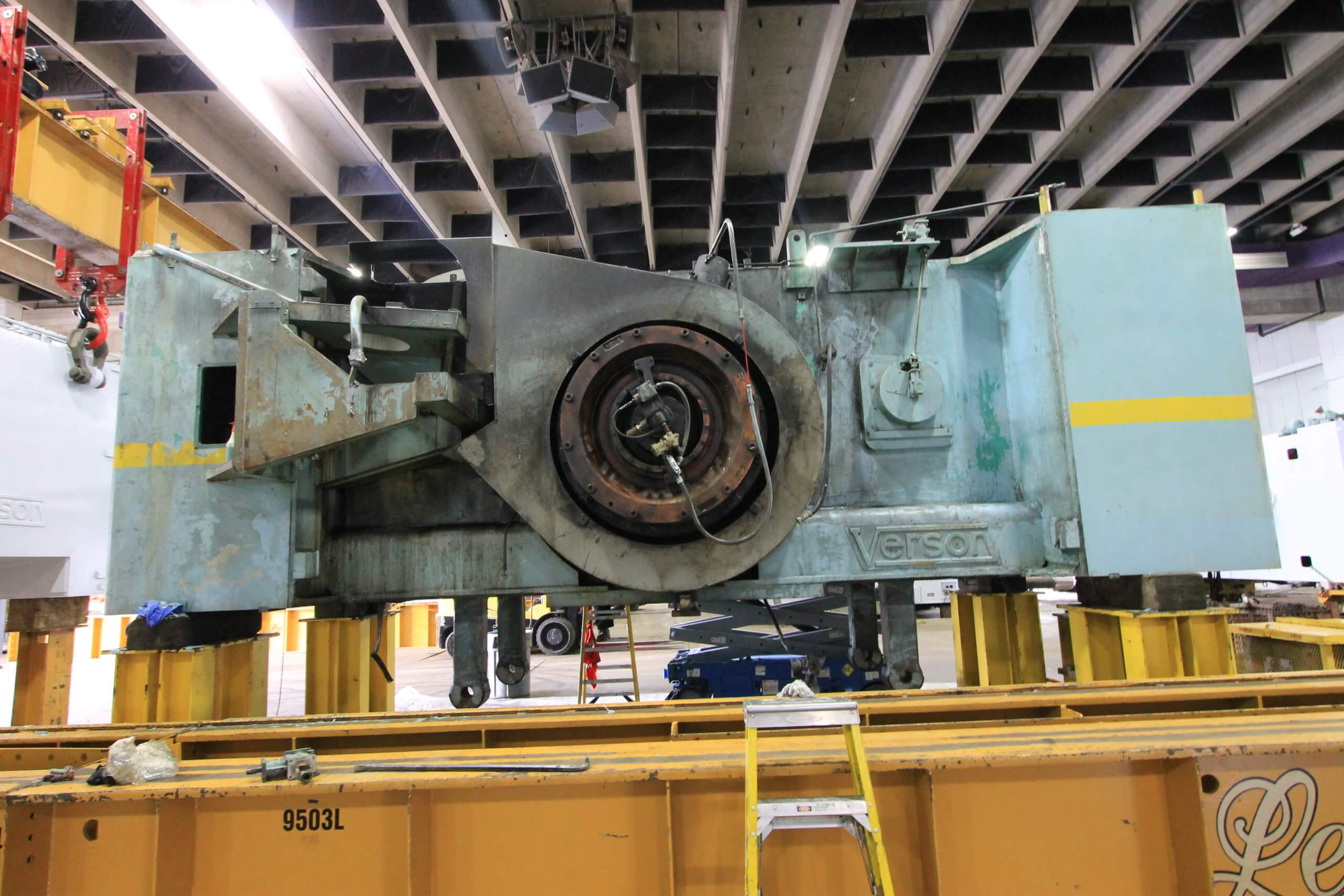
Repairing your press is extremely important to keep production at maximum efficiency. Taking the time to inspect your press can save you time and money in the future. When your press is being dismantled for repair, this provides a great opportunity to inspect the press for any further repairs or modifications to enhance the system. Taking this time to inspect the press can save time and money. A large part of the expense of equipment repairs or modifications is the labor associated with teardown and inspection.
Timing your press repair around a relocation is beneficial because production downtime is already planned. Components targeted for replacement or repair can be dealt with while the rest of the machinery is being moved to its new location. In many cases, components can be repaired and reinstalled with the other equipment as a seamless process.
 For example, during the dismantle inspection, it may be revealed that the drive shaft or the ram needs to be rebuilt. Discovering any issues at this point and having all repairs and upgrades completed during this already scheduled downtime will save time and money in the long run. If the components are not rebuilt during this time, they will need to be fixed in the future which could cause disruption to production schedules. This would also be costly due to having to dismantle the press twice to reach and rebuild the components.
Lee Contracting has its own in-house maintenance and repair department. Our highly-skilled machine repair, industrial maintenance and machinist teams can maintain, troubleshoot, repair and rebuild your machinery. We offer on-site machine repair, or we can take your equipment to our fully equipped facility to perform repairs.
Our machining team uses state-of-the-art precision manufacturing equipment for reliable accuracy and consistency. We also offer portable machining services that enable us to keep your downtime to a minimum as well as save thousands of dollars by not having to completely disassemble large machinery.
Call us today at (888) 833-8776 for a free quote on relocating or repairing a press, or click here.
Subscribe and receive updates via email
Electrical Preventive Maintenance
Two weeks ago, we discussed the importance of preventive maintenance. Preventive Maintenance is also extremely necessary for electrical equipment. A great deal can go wrong if an electrical system is not adequately maintained. As electrical loads cycle between high and low demand, thermal expansion and contraction cause connections to loosen. Electrical panels that are never cleaned accumulate dust and dirt that deposit on these connections. The loose and dirty connections provide a high resistance path that are directly responsible for more than 30 percent of electrical failures. Another 17 percent of electrical failures are attributed to live electrical components being exposed to moisture. With a comprehensive electrical preventive maintenance program, both conditions — which account for almost half of all electrical losses — can be corrected.
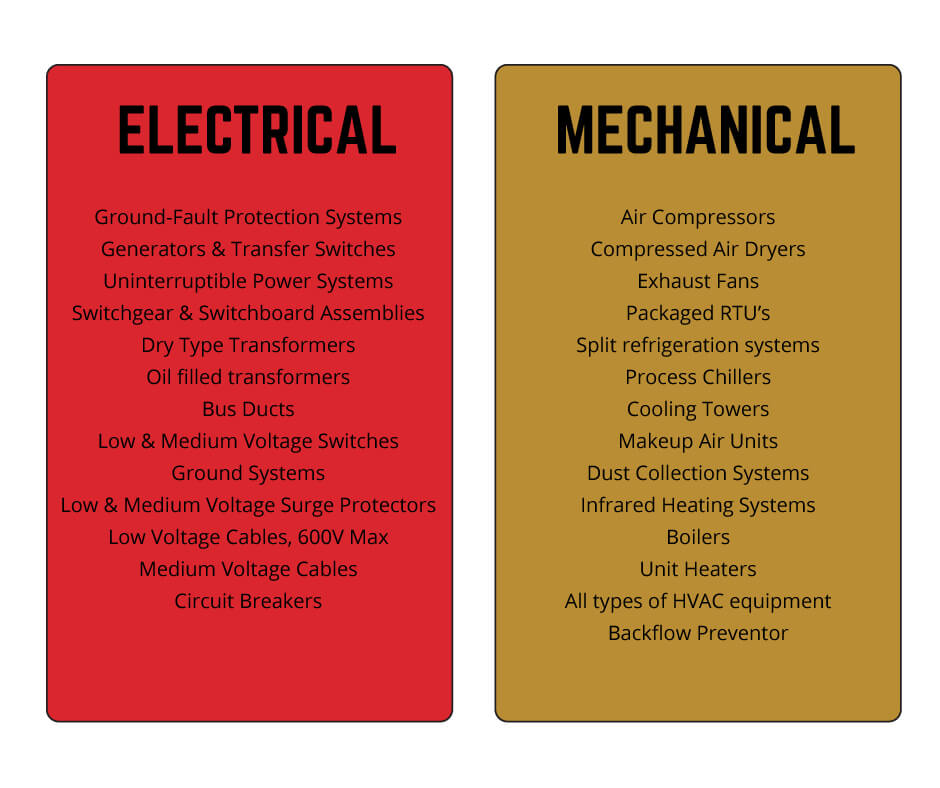
*Thermal Imaging maintenance should be completed on electrical equipment every 12 months.
How Preventive Maintenance Saves You Money
- Reduced Downtime
- Increase Operational Efficiency
- Reduce the Risk of Expensive Reactive Maintenance
- Increase the Life of Equipment
- Improved Customer Service
With the failure rate of electrical equipment being 3 times higher for components that are not included in a scheduled preventive maintenance program, the benefits are hard to argue. We can plan maintenance in coordination with scheduled shutdowns to reduce downtime. Our electrical team is continuously trained and keep up to date on electrical codes and regulations.
We pride ourselves on removing the barriers that come with hiring multiple contractors. With all our trades under one roof, we control every aspect of your next project, saving you time and money.
Interested in implementing an effective preventive maintenance plan for your business or organization? We can help determine your maintenance plan and what your equipment needs.
Contact us today or call us at (888) 833-8776 to learn how we can manage your production with preventive maintenance.
Subscribe and receive updates via email
Equipment Capabilities
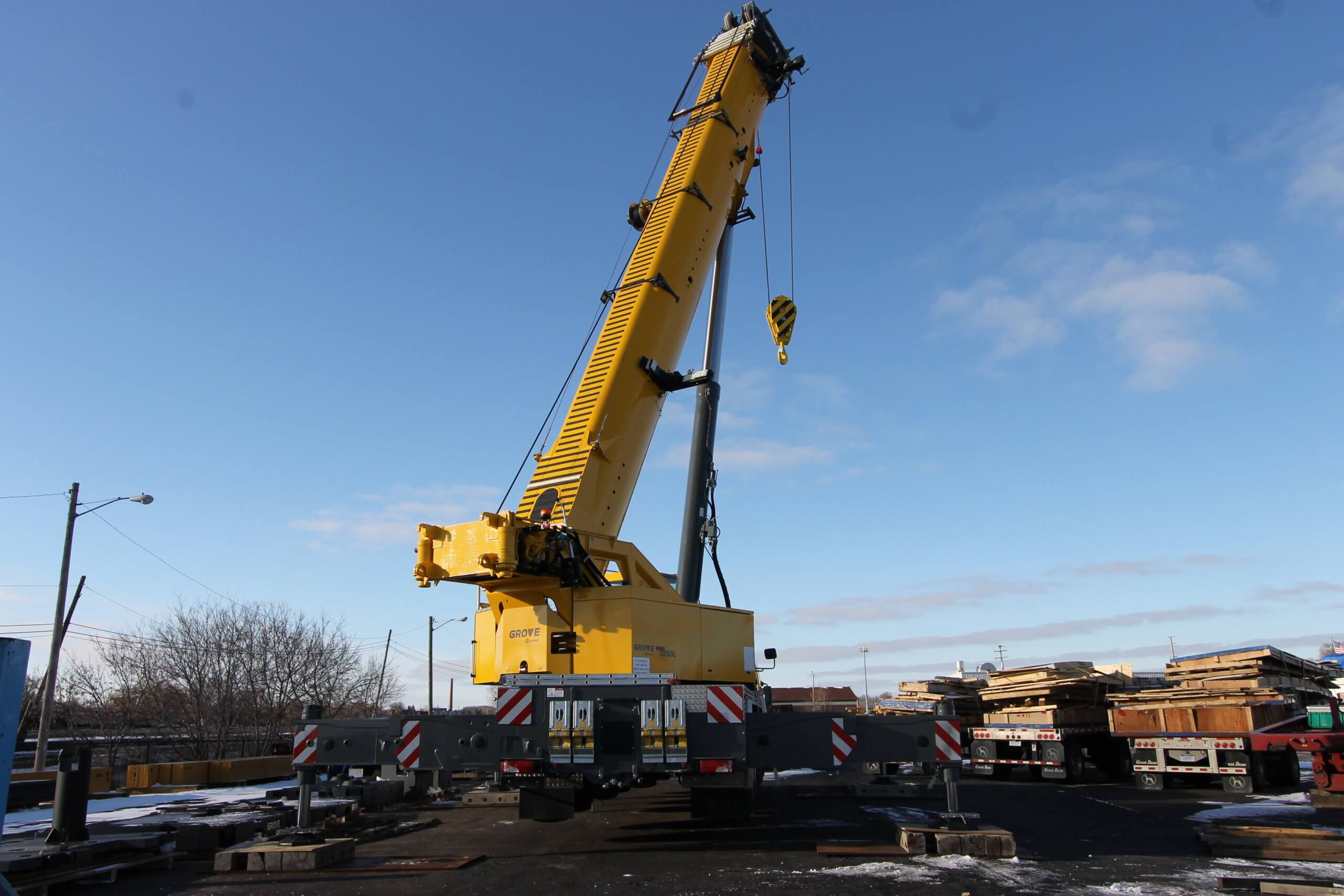
Our turn-key services get your job done from start to finish. Our specialized equipment sets us apart from the competition. Owning our equipment allows us to provide the best competitive rates to lower project costs. Our specialized equipment allows us to perform all different types of projects.
A short list of our in-house equipment consists of:
- Fork Trucks
- Man Lifts
- Gantry Systems
- Excavation Equipment
- Cranes
- Die Carts
- Generators
Goldhofer
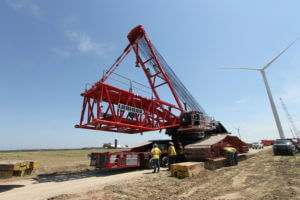 Our Goldhofer is a unique piece of equipment that not many industrial contractors own. The Goldhofer is a self-propelled modular transporter with 10-axles and a 1-million ton capacity. This specialized piece of equipment can travel down roads and make the impossible, possible.
Maintenance & Repair
Our team of dedicated mechanics provide the best service and maintenance work in the industry. This means that if your current equipment needs to be serviced, we are here to help get your equipment back in working condition. Our maintenance and repair department teamed together with our specialized equipment provides versatile protection of your current equipment with the ability to help you expand your production.
Want to learn more about what we can do with our in-house equipment?
Call us today for a free quote on your next project at (888) 833-8776 or request a quote online.
Subscribe and receive updates via email
Equipment Maintenance
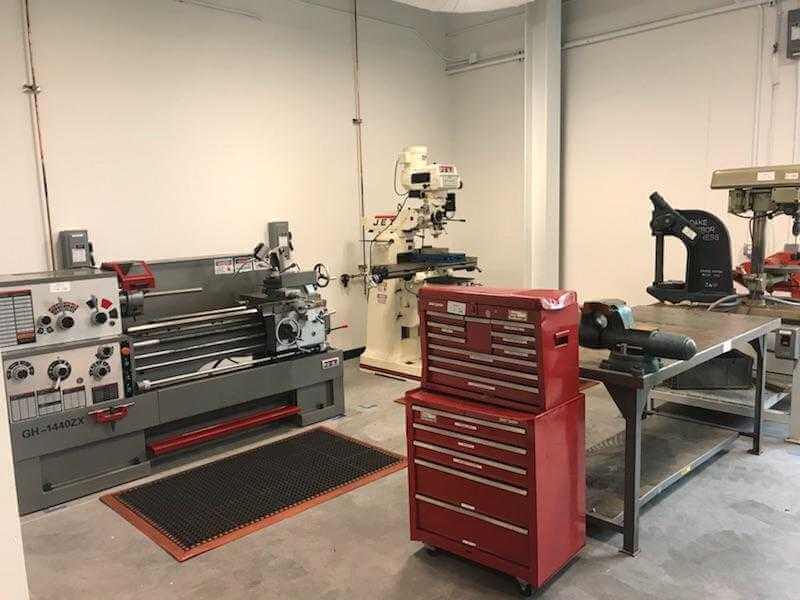
Regular maintenance of equipment is an important and necessary activity. Maintenance covers many activities including inspection, testing, measurement, replacement and adjustment. There are two types of maintenance: preventive maintenance is planned and focuses on preventing future problems, while corrective maintenance is reactive and occurs when equipment requires service to be repaired. Preventive maintenance is all-inclusive to improve reliability, reduce the probability of an unexpected breakdown and extend your equipment’s lifespan.
Our equipment maintenance teams are highly trained and skilled to know the ins and outs of your equipment. Our knowledgeable staff is productive and safe, which means your equipment is in the best hands.
 Maintenance can be a high-risk activity. There can also be difficulties in accessing equipment that requires maintenance and this may require work at heights or confined space entry. At Lee Contracting we always ensure that safe working procedures are followed. Our technicians prepare their workspace, complete any necessary safety documents, identify potential hazards, make sure to be equipped with the correct tools and wear PPE. Our safety department helps eliminate safety hazards. We continue to maintain safe, organized, clean and efficient job sites as the safety of our personnel and customers is always our top priority.
Our approach is to provide preventative maintenance for your machinery & equipment. But we know that emergencies happen, which is why we provide 365-day, 24/7 emergency service to those in need of getting equipment up and running. Our machine repair department is made of highly skilled machine repair, industrial maintenance and machinist teams ready to maintain and repair your equipment.
Call us today to receive a free quote for your next industrial project, (888) 833-8776.